
Observation over exams.
Assessment happens through observation, conversation and small tasks not high-pressure written tests. We want to know what a child understands, not how well they can sit an exam.

Our Curriculum Foundation
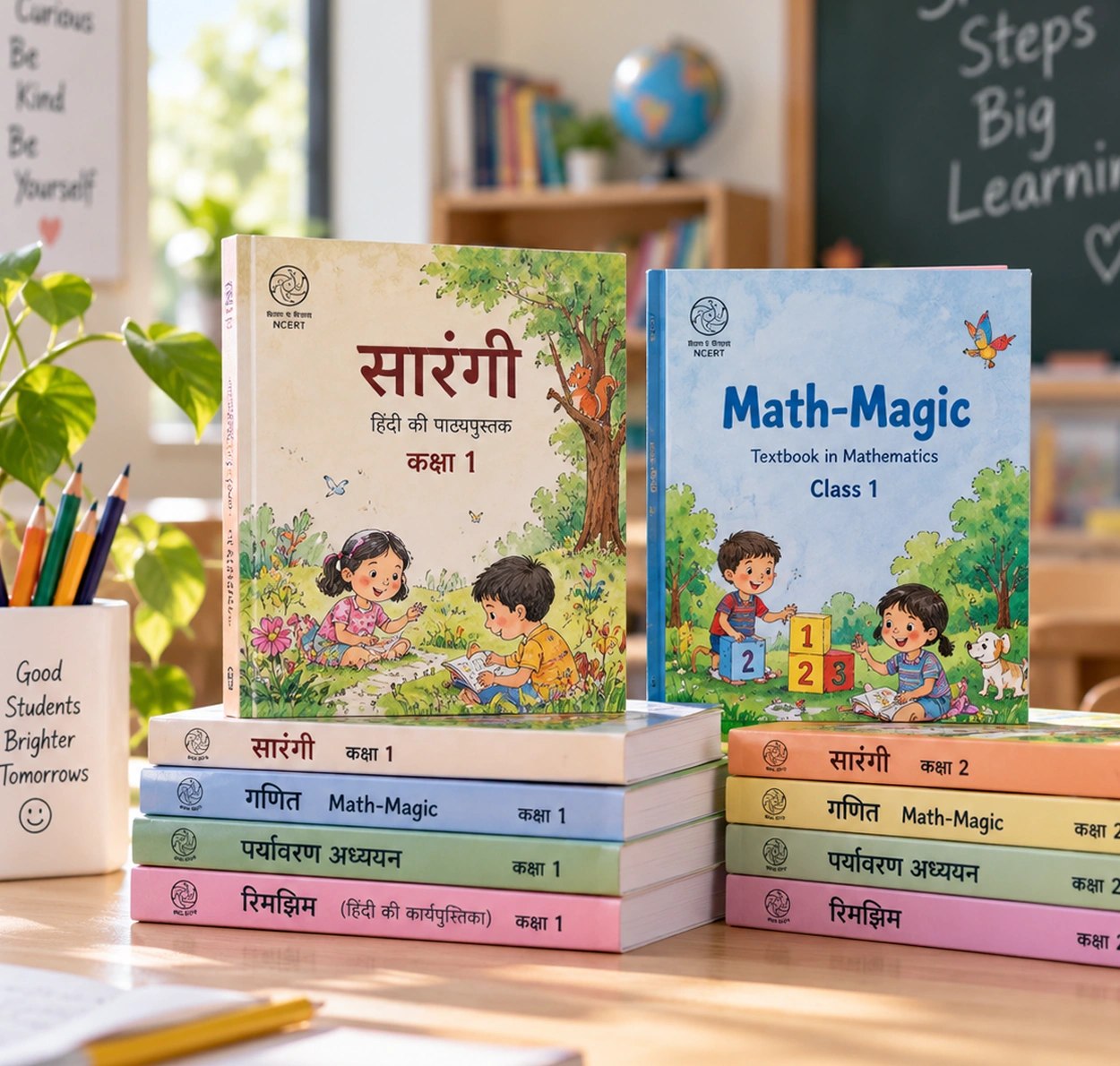
Minerva follows the CBSE framework using NCERT textbooks only — nothing more. We haven't layered on the additional workbooks or supplementary text sets that many schools ask families to buy. This isn't about teaching less. It's about spending a child's time and energy on understanding a concept properly, rather than repeating it across five different books.
How We Assess
Assessment happens through observation, conversation and small tasks not high-pressure written tests. We want to know what a child understands, not how well they can sit an exam.

We keep you informed with a clear and consistent reporting rhythm - through report cards, parent-teacher meetings, or both - before publishing specific timing.
Communication & Confidence
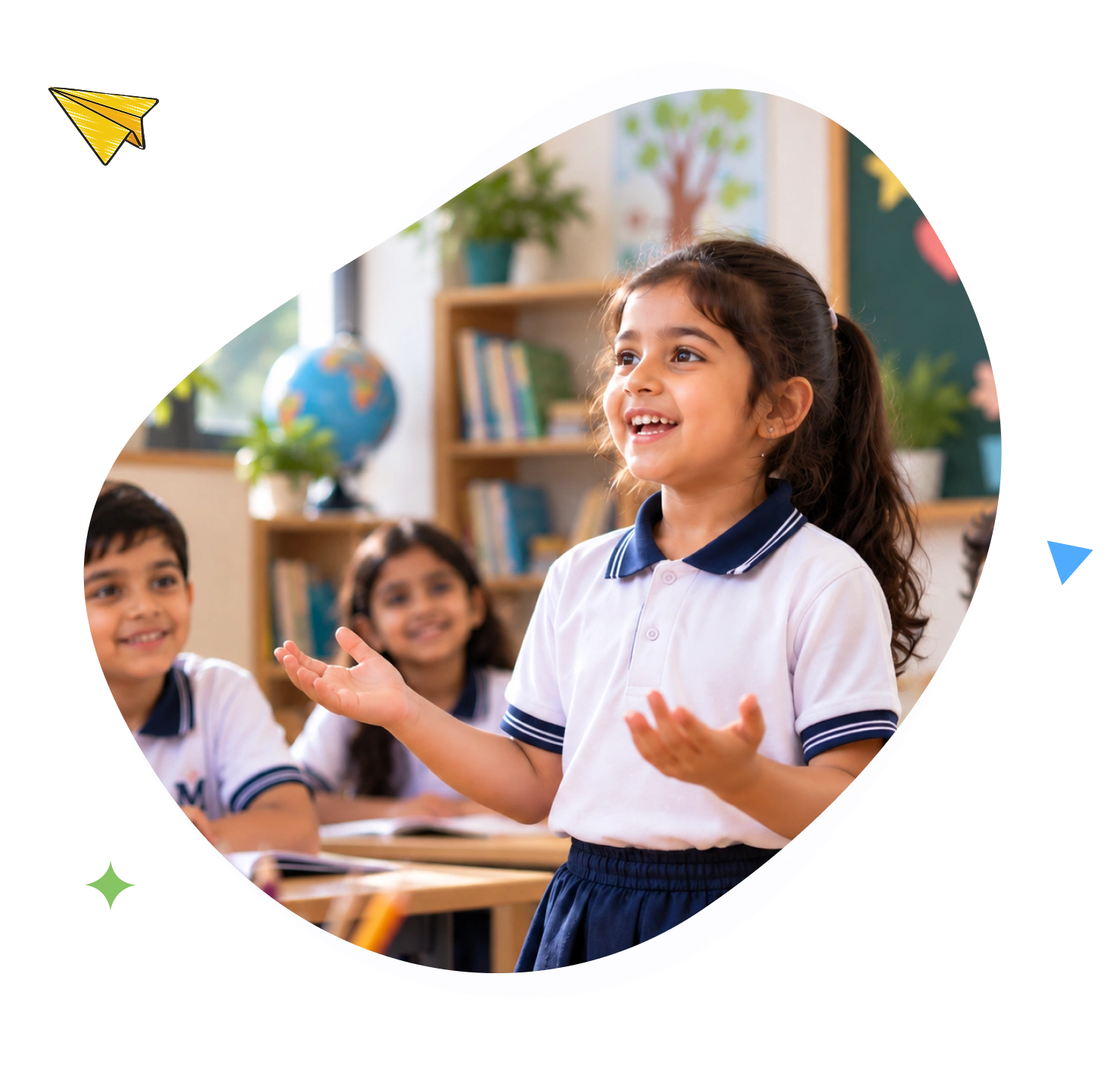
Every child gets regular, structured practice speaking English — not just grammar worksheets. That includes show-and-tell, group discussion and time on stage, so that speaking in front of others becomes familiar early, not intimidating later.
 Daily verbal practice
 Regular stage time
 Confidence, not perfection
Stage by stage
The same philosophy, taught differently at every age.

Playgroup
Sensory exploration, motor skills and early language, built entirely through play.
Story & Rhyme Time
Free Play & Exploration
Art & Sensory Play
 Movement & Motor Skills

Nursery/KG
Early literacy and numeracy through play, with growing independence and vocabulary.
Pre-Reading & Phonics
Number Sense
EVS Discovery
Show & Tell

Grade I
NCERT-based subjects begin, alongside hands-on maths and science thinking.
English & Hindi
Mathematics
Environmental Studies
Spoken English & Stage Practice

Grade II
Greater independence, reading fluency and structured project work.
English & Hindi
Mathematics
Environmental Studies
Art, Craft & Presentation Skills
Behind the classroom
Our approach draws on Finnish-inspired, play-based pedagogy — observing each child closely, and treating families as partners in learning.
01
Teachers are trained to watch how each child learns before deciding how to teach them.
02
Lessons are planned to include every learning pace and style, not just the average one.
03
Parents are treated as partners in a child's learning, not spectators of it.
Faqs (Frequently Asked Questions)
Yes. NCERT books form the academic foundation at Minerva. We keep the curriculum focused without asking children to carry multiple additional textbooks. The book provides the foundation, while classroom conversations, activities, projects and practical experiences help children understand and apply what they learn.
The textbook is the starting point — not the entire learning experience.
Children are encouraged to question, discuss, explore and apply concepts through classroom activities, conversations, hands-on experiences and age-appropriate projects. Our aim is to help children understand ideas rather than simply memorise them.
In the early years, we look beyond traditional written tests. Teachers observe how children participate, communicate, solve problems, interact with others and develop new skills.
Assessment helps teachers understand where a child is in their learning journey and how they can support their next step.
We believe learning should not become a source of unnecessary pressure for young children.
Classroom learning, activities and practice form an important part of the learning journey. Any homework or practice should have a clear purpose and be appropriate to the child’s age and stage.
Speaking is treated as a skill that children need to practise, not just study.
Children get opportunities for conversations, show-and-tell, group discussions, presentations and stage experiences. These regular opportunities help children become more comfortable expressing their thoughts in front of others.
Confidence grows through repeated opportunities to participate.
Rather than expecting children to become confident overnight, we create small opportunities to speak, answer questions, share ideas, present and perform. Over time, these experiences help children become more comfortable using their voice.
The learning areas develop with the child’s age and stage.
For the early years, learning includes areas such as language development, early mathematics, environmental exploration, creative expression, movement and social-emotional development.
As children move into Grade I and II, their learning becomes more structured around areas including English, Hindi, Mathematics and Environmental Studies, alongside creative and communication experiences.
The philosophy stays consistent, but the way children learn evolves with their development.
Same philosophy. Different stage.
Admissions Open 2027-28
Limited seats Available - take the first step toward their future.
Apply Now